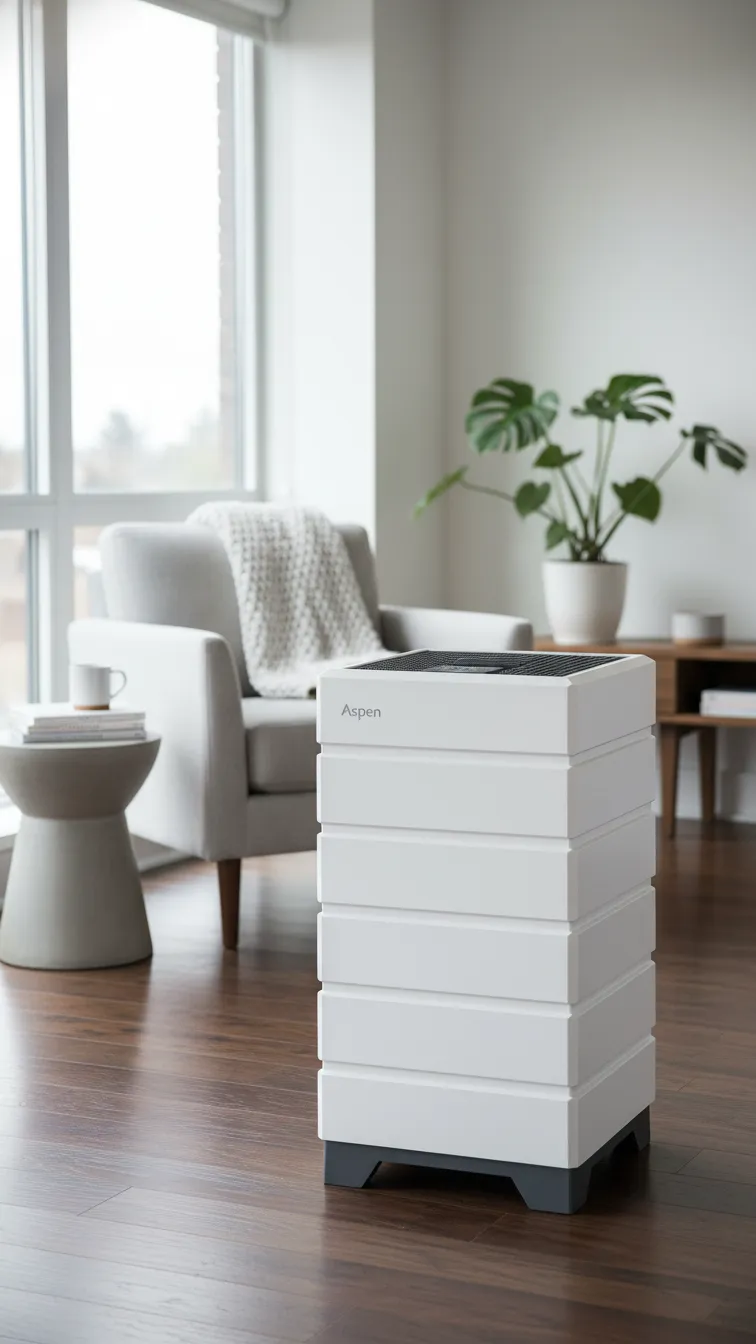
Aspen Air Purifier Filter Replacement: Complete Guide to When, Why, and How
Your Aspen air purifier uses a 3-stage filtration system engineered to remove 99.97% of airborne particles down to 0.3 microns. But filters don't last forever. Here's everything you need to know about keeping your Aspen running at peak performance.
The Three Filters in Your Aspen Air Purifier
Every Aspen air purifier uses three dedicated filters, each handling a different job. This multi-stage approach means each filter lasts longer and performs better than single-filter systems.
1. Allergy Filter (Stage 1)
The first line of defense. This pre-filter captures large particles like pollen, pet hair, dust, and lint before they reach the more delicate HEPA filter. It's rated MERV 13 or higher, which means it catches particles down to 1 micron — that includes most pollen grains, mold spores, and pet dander.
By handling the heavy lifting upfront, the allergy filter extends the life of your HEPA filter significantly. Without it, your HEPA filter would clog in months instead of lasting a full year.
2. Microparticle HEPA Filter (Stage 2)
The core of the system. This H13 True HEPA filter captures 99.97% of particles at 0.3 microns — the Most Penetrating Particle Size. That includes fine dust, bacteria, virus carriers, smoke particles, and ultrafine allergens that pass through lesser filters.
The Aspen uses a medical-grade sealed housing so air can't bypass the filter. Every molecule of air passing through the unit goes through the HEPA media. No shortcuts, no leaks.
3. Activated Carbon Filter (Stage 3)
This isn't the thin carbon sheet you find in budget purifiers. The Aspen uses a substantial activated carbon filter designed to adsorb volatile organic compounds (VOCs), formaldehyde, cooking odors, smoke, and chemical off-gassing from furniture and building materials.
For homes with smokers, pets, or new construction, the activated carbon stage is what makes the difference between a room that smells clean and one that actually is clean.
When to Replace Your Aspen Filters
Aspen recommends replacing all three filters every 12 months under normal residential use. However, several factors can shorten filter life:
Replace sooner if:
You have multiple pets (especially cats — cat dander is finer and more persistent than dog dander). You live in a high-pollution area or near a busy road. You or someone in your home smokes indoors. You're running the purifier in a space with active construction or renovation. You notice reduced airflow or the purifier running louder than usual on the same speed setting.
Signs your filters need replacement:
Visible discoloration or dust buildup on the pre-filter when you open the compartment. Reduced airflow even on the highest setting. Return of allergy symptoms or odors that the purifier was previously handling. The purifier's air quality sensor consistently reads higher than normal.
How to Order Replacement Filters
Genuine Aspen replacement filters are available directly from aspenairpurifiers.com. You can purchase filters individually or as a complete set:
Individual Filters:
Allergy Filter — $125
Microparticle HEPA Filter — $125
Activated Carbon Filter — $125
Complete Filter Set — $288 (save vs. buying individually)
We recommend replacing all three filters at the same time. A fresh HEPA filter paired with a clogged carbon filter (or vice versa) means the system isn't performing at its designed capacity.
Save More with the Clean Air Protection Plan
The 10-Year Filter Plan + Extended Warranty covers 10 years of filter replacements plus an extended warranty for $2,000 — that's $200 per year instead of $288, saving you $880 over the life of the plan. Filters ship automatically so you never miss a change.
Why Genuine Aspen Filters Matter
Third-party filters may fit the housing, but they don't match the engineering. Here's what you lose with generic replacements:
Seal integrity. Aspen filters are precision-cut to create an airtight seal within the housing. Generic filters often have slight dimensional differences that create bypass gaps — air flowing around the filter instead of through it.
Media quality. The H13 HEPA media in genuine Aspen filters is tested to maintain 99.97% efficiency across its entire surface area. Generic HEPA filters may meet the spec at the center of the media but lose efficiency at the edges and pleats.
Carbon weight. The activated carbon filter in the Aspen uses a specific weight and grade of granular activated carbon calibrated for the unit's airflow rate. Less carbon or different grades means faster saturation and reduced odor removal.
How to Replace Aspen Air Purifier Filters
Step 1: Turn off and unplug your Aspen air purifier.
Step 2: Open the filter access panel on the back of the unit.
Step 3: Remove the filters in order — allergy filter first (outermost), then HEPA filter, then activated carbon filter.
Step 4: Insert new filters in reverse order — carbon filter first, then HEPA, then allergy filter. Make sure each filter seats firmly with no gaps around the edges.
Step 5: Close the access panel until it clicks securely.
Step 6: Plug in and restart your Aspen. Reset the filter life indicator if your model has one.
The entire process takes less than 5 minutes. No tools required.
Frequently Asked Questions
How often should I replace my Aspen air purifier filter?
Every 12 months under normal use. Homes with pets, smokers, or high pollution may need replacement every 6-9 months.
Can I wash and reuse Aspen filters?
No. HEPA filters and activated carbon filters cannot be washed or vacuumed without destroying the filter media. Washing a HEPA filter breaks down the fine fibers that capture particles, reducing efficiency below usable levels.
Where can I buy Aspen air purifier replacement filters?
Directly from aspenairpurifiers.com. This ensures you receive genuine filters with the correct specifications for your unit.
What happens if I don't replace the filters?
Clogged filters reduce airflow, which means fewer air changes per hour and more allergens, particles, and odors in your space. The motor also works harder to push air through clogged media, increasing energy consumption and potentially shortening the motor's lifespan.
Do I need to replace all three filters at once?
We recommend it. The three filters work as a system. A fresh HEPA filter paired with a saturated carbon filter means you're still breathing VOCs and odors. Replacing all three at once ensures the full system operates at designed capacity.
Aspen Air Purifiers are built in Seymour, Connecticut with 3-stage HEPA filtration, a German-engineered EC motor, and 1,500 sq ft coverage. Shop filters and purifiers at aspenairpurifiers.com
]]>