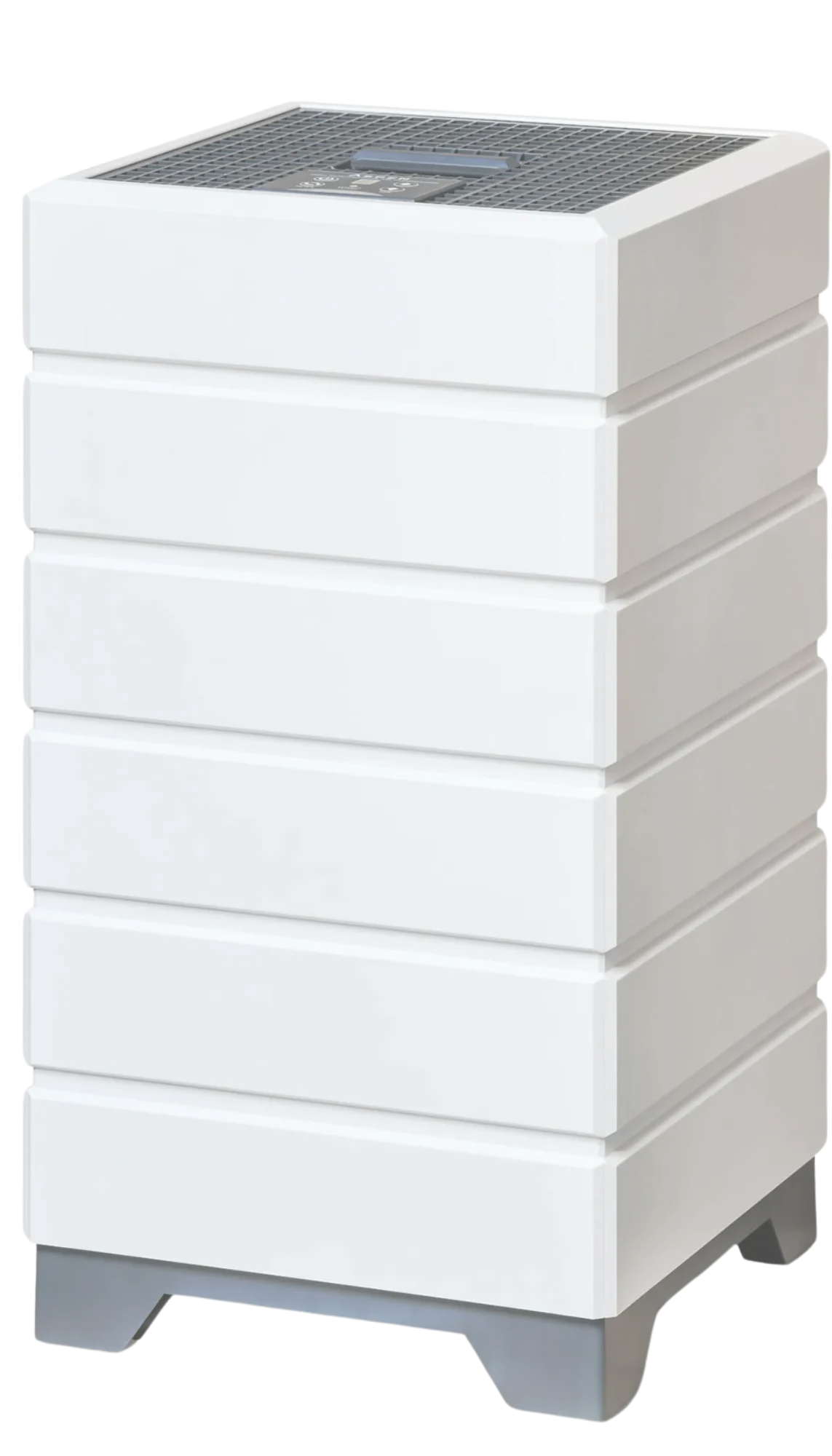
Medical-Grade Air Purifier vs. Consumer Models: What Actually Matters
A medical-grade air purifier captures 99.97% of particles down to 0.3 microns using True HEPA filtration, runs continuously in clinical settings, and uses multiple filtration stages to handle everything from allergens to volatile organic compounds. A consumer model might capture 95% at 2 microns — and that 4.97% gap is where the stuff that actually makes you sick lives.
If you're healthy and just want less dust in your apartment, a consumer model works fine. If you have respiratory issues, chemical sensitivities, or you're trying to protect someone with a compromised immune system, the difference between "pretty good" and "medical-grade" is the difference between managing symptoms and actually solving the problem.
What "Medical-Grade" Actually Means
The term gets thrown around loosely, so let's be specific. A medical-grade air purifier meets the filtration standards used in hospitals, dental offices, and surgical suites. That means:
True HEPA filtration (H13 or higher) — not "HEPA-type" or "HEPA-style," which are marketing terms that mean almost nothing. True HEPA is a defined standard: 99.97% capture rate at 0.3 microns. That's the size of the most penetrating particle — the hardest size to catch. Everything larger and smaller gets captured at even higher rates.
Multi-stage filtration — a single HEPA filter handles particulates but misses gases, chemicals, and odors. Medical-grade systems layer multiple filter types: pre-filters for large particles and hair, HEPA for fine particulates, activated carbon for VOCs and chemicals, and sometimes antimicrobial coatings or UV stages for biological threats.
Continuous duty operation — consumer units are designed to run a few hours at a time. Medical-grade units run 24/7 in clinical environments where shutting down isn't an option. That means better motors, better bearings, and components rated for 30,000+ hours of operation.
Sealed system design — this one is underrated. It doesn't matter how good your filter is if air leaks around it. Medical-grade purifiers use gasket-sealed filter housings so every molecule of air passes through the filtration media. Consumer models with loose-fitting filters can leak 20-30% of airflow around the filter entirely.
The Particle Size Problem
Here's where things get practical. The particles you can see — dust bunnies, pet hair, pollen clumps — are 10+ microns. Any filter catches those. The particles that damage your lungs and enter your bloodstream are 2.5 microns and smaller. The particles that carry viruses are 0.1 to 0.3 microns.
A consumer "HEPA-type" filter rated at 2 microns completely misses the range where respiratory viruses, fine combustion particles, and ultrafine allergen fragments live. These are the particles linked to cardiovascular disease, respiratory inflammation, and immune system suppression in the medical literature.
True HEPA at 0.3 microns catches these. That's not a nice-to-have — for people with asthma, COPD, or weakened immune systems, it's the entire point.
When Consumer-Grade Is Fine
Not everyone needs medical-grade, and we'll say that plainly. If you're a healthy adult in a reasonably clean environment and you just want to reduce dust and seasonal pollen, a decent consumer HEPA unit from a reputable brand will do the job. You'll notice less dust on surfaces, fewer allergy symptoms during peak season, and generally fresher-smelling air.
The calculus changes when any of these apply:
- Someone in your home has asthma, COPD, or chronic respiratory issues. Their lungs are already compromised. The fine particles a consumer unit misses are exactly the ones triggering flare-ups.
- You're protecting an immunocompromised person. Post-surgery patients, people undergoing chemotherapy, organ transplant recipients — their bodies can't fight off what they inhale. Medical-grade filtration isn't optional here.
- You have a newborn or are pregnant. Developing lungs and immune systems are disproportionately affected by fine particulate exposure. The first 1,000 days of life set the trajectory for respiratory health.
- You're dealing with chemicals, not just particles. New construction off-gassing, wildfire smoke, tobacco smoke, or industrial chemicals require activated carbon filtration that most consumer units don't include — or include in token amounts that saturate in weeks.
- You run a clinic, dental practice, or veterinary office. Patient safety regulations exist for a reason. Consumer air purifiers don't meet the standards your licensing board expects.
The Multi-Stage Advantage
Single-filter systems force one filtration media to do everything. That's like asking a baseball glove to also be a butterfly net and a coffee filter. Each type of airborne contaminant requires a different capture mechanism:
Pre-filter: catches large particles (dust, hair, lint) before they clog the expensive HEPA filter. Extends HEPA filter life by 30-50% and keeps airflow efficient.
True HEPA filter: captures 99.97% of particles at 0.3 microns through a combination of interception, impaction, and diffusion. This is the workhorse for allergens, mold spores, bacteria, and virus-carrying aerosols.
Activated carbon filter: adsorbs gases and volatile organic compounds through chemical bonding. This is what removes paint fumes, cleaning chemical odors, wildfire smoke chemicals, and formaldehyde off-gassing from new furniture and building materials. The key metric is carbon weight — consumer units might have 100 grams; a serious system has 2+ pounds.
Antimicrobial treatment: some medical-grade systems include antimicrobial coatings on filter media or UV-C stages to neutralize captured biological contaminants. This prevents the filter itself from becoming a breeding ground for bacteria and mold.
Room Size and Air Changes Per Hour
This is where most people get misled. A consumer air purifier rated for "500 sq ft" might process that volume once per hour. Medical and clinical standards call for 4-6 air changes per hour (ACH) — meaning the entire room volume passes through the filter 4-6 times every 60 minutes.
If you want clinical-level air quality in a 500 sq ft room, you need a purifier with roughly 4x the airflow capacity that the "500 sq ft" rating implies. A medical-grade unit rated for that space at 4+ ACH is doing fundamentally different work than a consumer unit that technically "covers" the same square footage.
This is especially relevant for bedrooms, where you spend 6-8 hours breathing the same air. High ACH in a bedroom means every breath you take during sleep passes through medical-grade filtration multiple times.
The Cost Conversation
Medical-grade air purifiers cost more upfront. A quality system runs $800-1,500+ compared to $100-300 for consumer models. But the comparison isn't apples-to-apples:
Filter longevity: Medical-grade HEPA filters in a well-designed system (with proper pre-filtration) last 12-18 months. Consumer filters that look similar might need replacement every 3-6 months because poor pre-filtration lets large particles clog the HEPA media faster.
Energy costs: A sealed system with properly matched motors runs more efficiently than a consumer unit struggling against air leaks and restriction. Over 24/7 operation, this adds up.
Healthcare costs avoided: This is harder to quantify, but the EPA estimates indoor air pollution costs Americans $7 billion annually in healthcare expenses. For someone managing asthma or COPD, even one avoided ER visit more than pays for the upgrade.
Durability: Consumer units are designed for 2-3 years of moderate use. Medical-grade systems built for continuous clinical operation last 7-10+ years. Amortized over their lifespan, the per-year cost often favors the medical-grade unit.
What to Look for When Shopping
Ignore the marketing and check these specs:
- Filter class. True HEPA (H13 or H14), not "HEPA-type" or "HEPA-style." If the spec sheet doesn't state the ISO class, assume the worst.
- Number of filtration stages. Minimum three (pre-filter + HEPA + carbon). More stages mean more comprehensive protection.
- CADR (Clean Air Delivery Rate). Published in cubic feet per minute. Divide your room volume by CADR to see how many air changes per hour you're actually getting.
- Activated carbon weight. Not surface area — actual weight. More carbon means more gas-phase contaminant removal and longer filter life.
- Sealed filter housing. Ask if air can bypass the filter. If the answer is anything other than "no," keep looking.
- Noise level at operating speed. Not the lowest fan setting — the setting you'll actually use. A purifier that's too loud to run continuously is a purifier that sits in a closet.
- Independent testing. Any manufacturer can claim 99.97%. Third-party verification from an accredited lab means they actually proved it.
The Bottom Line
For most healthy people in average indoor environments, a reputable consumer HEPA air purifier is a meaningful improvement over no air purification at all. The best air purifier is the one you actually run.
But if you're making a health-driven decision — protecting vulnerable family members, managing respiratory conditions, recovering from illness, or eliminating chemical exposures — medical-grade isn't a luxury. It's the minimum effective dose.
The air in your home passes through your lungs roughly 20,000 times per day. What's filtering it matters.
]]>