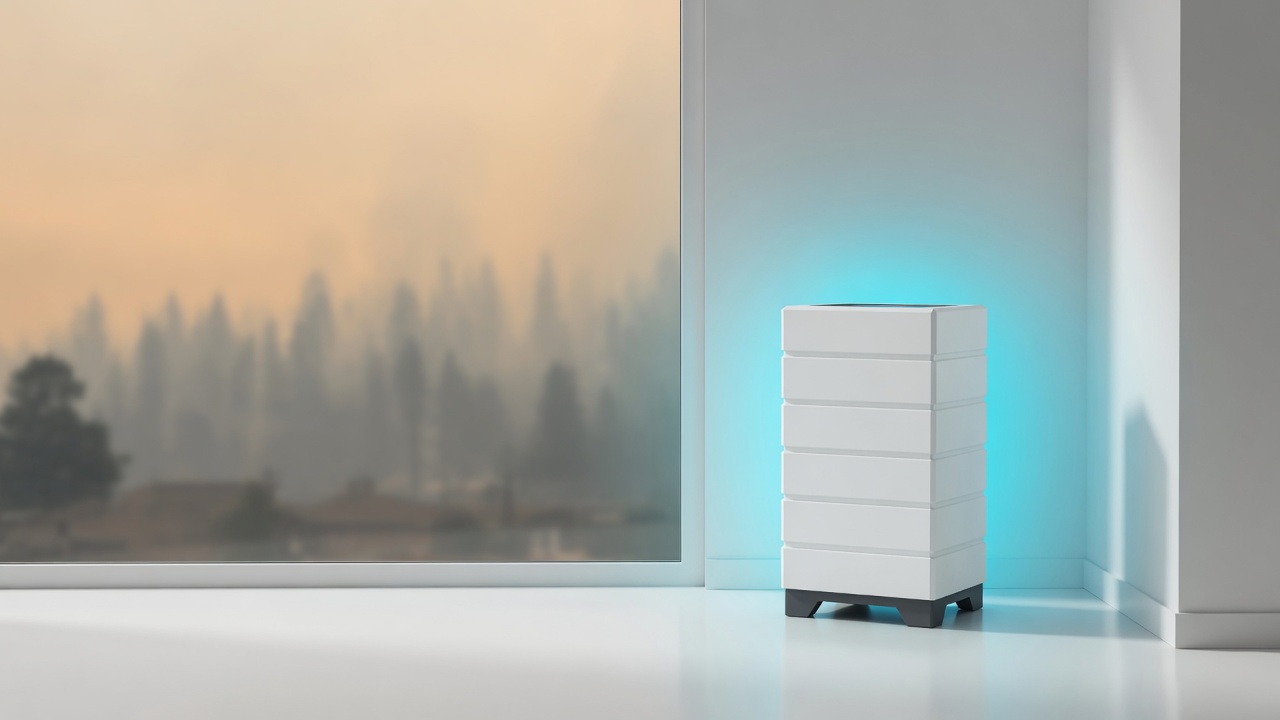
Wildfire Smoke, PM2.5, and CADR in 2026: How to Size a Purifier That Actually Clears Air
Wildfire smoke is still shaping how Americans buy air purifiers in 2026. Even households hundreds of miles from active fires now plan for haze days, AQI spikes, and indoor PM2.5 that lingers after outdoor air looks “better.” Seasonal allergies stack on top of that. The result is a market driven by two practical needs: particle control and enough airflow to clear a real room.
This guide explains what CADR (especially smoke CADR) means, how to size a unit for wildfire and PM2.5 events, and why high-CADR machines like the Aspen ( 442 CFM pollen / 373 CFM smoke ) are built for the homes that keep coming up short with small towers.
Need high smoke CADR now?
Aspen Air Purifier — $1,649 · 373 CFM smoke CADR class · Free shipping · ships today* · $149 off with on-site signup.
Shop filter sets · How Aspen works
*Contiguous USA. Daily shipping cutoff times apply.
What is still driving demand in 2026
You do not need invented “studies of the week” to see the pattern. Public health agencies, weather services, and retailers all treat wildfire smoke and allergy seasons as recurring indoor-air events:
Wildfire smoke and long-range haze push outdoor PM2.5 into homes through cracks, HVAC returns, and door traffic.
Allergy seasons (pollen, mold spores, pet dander spikes) keep particle loads high even when skies look clear.
Open-plan living means one small bedroom purifier cannot keep up with the main floor.
Industry and media coverage of portable purifiers has followed those drivers for years. Shoppers who lived through multi-day AQI alerts tend to upgrade from “something is better than nothing” to “what is the smoke CADR and will it cover my living room?”
PM2.5 and why smoke is harder than dust
PM2.5 means particles 2.5 microns and smaller. Wildfire smoke is rich in fine and ultrafine particles that stay suspended, travel far, and infiltrate indoor spaces. Closing windows helps. It does not seal a modern house perfectly.
A useful purifier for smoke days needs:
True HEPA-class media (not vague “HEPA-type” marketing) with a sealed housing so air does not bypass the filter.
High smoke CADR so the room turns over air fast enough during an event.
Meaningful activated carbon for odors and many gas-phase compounds that travel with smoke. Particle filters alone do not handle the full chemical mix.
If a unit only claims “quiet” and “stylish” without smoke CADR you can verify, treat the claim as incomplete for wildfire season.
CADR in plain English
CADR (Clean Air Delivery Rate) measures how many cubic feet of clean air a purifier delivers per minute for a test pollutant. AHAM-style testing commonly reports dust, pollen, and smoke. Higher CADR means faster cleanup in a given room size.
For smoke-heavy days, prioritize smoke CADR. For spring allergy months, pollen CADR matters too. Aspen publishes both ends of that need:
442 CFM pollen
373 CFM smoke
Those numbers are why Aspen shows up in large-room conversations next to premium brands. Air moved through serious media beats a pretty shell with a thin filter pack.
How to size for wildfire smoke
A practical rule used across the industry for aggressive particle control:
Aim for higher CADR than the bare minimum for your square footage. Manufacturer room-size claims often assume about 2 air changes per hour. During a smoke event, more air changes feel better and clear haze faster.
Quick checks:
Closed bedroom (~150–250 sq ft): many mid-CADR consumer units can work if sealed HEPA is real.
Open living area (~400–800+ sq ft): mid-tower units often struggle. High CADR becomes non-negotiable.
Great room / open plan toward 1,000–1,500 sq ft class: look for flagship-class airflow. Aspen’s ~1,500 sq ft coverage intent and 373 smoke CADR are built for this tier.
During active smoke, run higher fan speeds even if the unit is louder. When outdoor AQI improves, step down to quieter continuous speeds while filters still do daily work.
Aspen for smoke-heavy living spaces
$1,649 list · Free shipping · ships today* · another $149 off with signup · CADR 442 / 373 (pollen / smoke).
Genuine filter sets · How Aspen works
*Contiguous USA. Cutoff times apply.
Why Aspen is positioned for this use case
High CADR: 442 pollen / 373 smoke for serious particle load days.
~1,500 sq ft class coverage for main living areas, not only a nightstand bedroom.
3-stage filtration: allergy pre-filter + H13 HEPA + activated carbon.
German EC motor for continuous duty without treating the machine like a weekend gadget.
Assembled in Seymour, Connecticut, USA with dealer fulfillment: free shipping and ships-today* messaging.
Read more engineering detail on how Aspen works. Pair the unit with genuine filter sets so smoke season does not leave you running a clogged cartridge at half performance.
Smoke-day operating checklist
Close windows and limit outdoor air when AQI is poor (check AirNow or your local AQI source).
Place the purifier in the room where people spend waking hours, not only the guest bedroom.
Run high during peak smoke. Drop to quieter continuous speeds when outdoor air improves.
Watch filter load after multi-day haze events. Smoke seasons can shorten filter life.
Keep HVAC filters at a higher MERV if your system can handle it, but do not assume HVAC alone equals a sealed portable HEPA path in occupied rooms.
FAQ
Is CADR the only number that matters?
No. Sealed HEPA, carbon capacity, noise at useful speeds, and honest room sizing all matter. CADR is still the fastest way to compare particle-cleaning power.
Will any HEPA purifier work for wildfire smoke?
HEPA-class media helps with particles. Undersized units still leave haze in large rooms. Thin carbon stages struggle with smoke odors. Size and stack quality both count.
What does Aspen cost?
List price is $1,649 on our store, with free shipping, ships-today* eligibility, and a signup path for another $149 off.
Do purifiers treat medical conditions?
No. An air purifier is not a medical treatment. It is a tool to reduce airborne particles and some odors/gases in a room when sized and maintained correctly.
Ready for hospital-grade air at home?
Aspen Air Purifier — $1,649. Free shipping · ships today*. Sign up for another $149 off.
Shop genuine Aspen filter sets · How Aspen works
*Contiguous USA. Cutoff times apply.
Related: Best purifier for wildfire smoke · Aspen vs Dyson vs IQAir · Medical-grade vs consumer · Order Aspen